
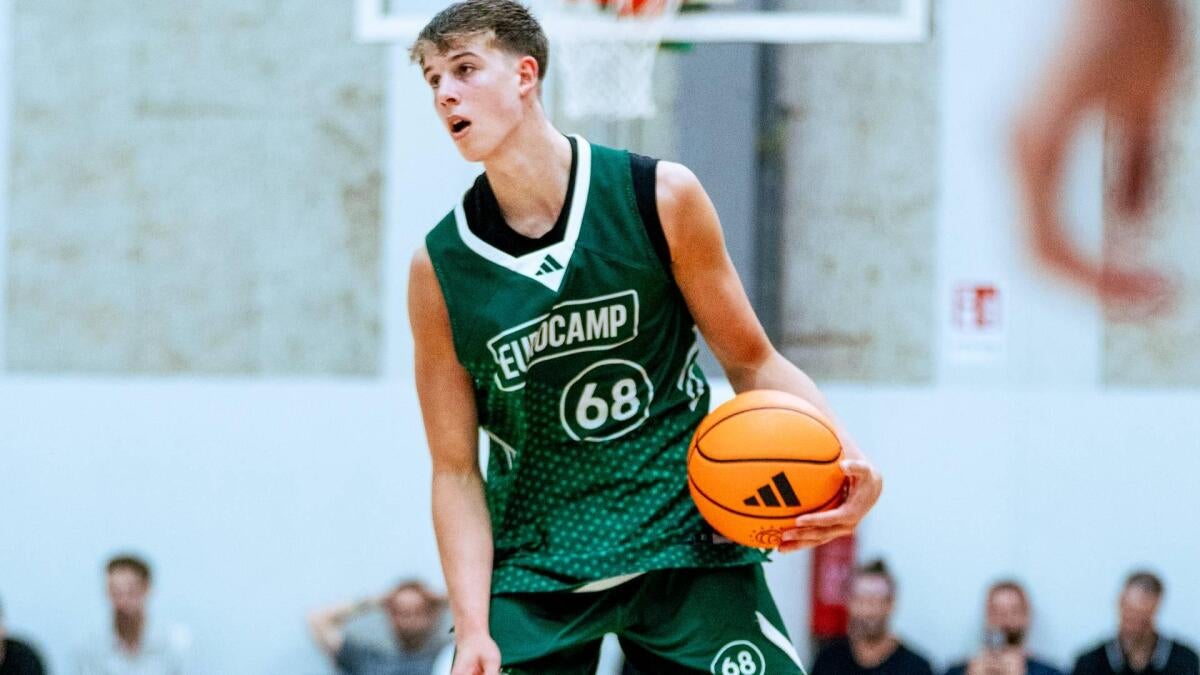
Already an international NBA pipeline, Eurocamp could become college basketball's next recruiting frontier
For years, the NBA has treated Europe as a rich talent reservoir, and events like Eurocamp have quietly served as scouting hubs for front offices. Now, with college programs increasingly hungry for international prospects, the same showcase that feeds the league’s global pipeline is emerging as a potential frontier for NCAA recruiting.
Eurocamp gathers many of the top young players from across Europe and beyond into a single, competitive environment that mirrors NBA structures. Prospects run through pro-style practices, play in organized scrimmages, and are evaluated by scouts who understand how their games might translate to the league. That format has traditionally given NBA teams a cleaner read on international talent than scattered club film or junior tournaments.
What is changing is who else is watching. As college staffs grow more sophisticated in their international scouting, Eurocamp offers a one-stop evaluation setting that rivals, and in some ways surpasses, domestic high school events. Coaches can see how a 17- or 18-year-old wing handles NBA spacing concepts, how a big defends in pick-and-roll coverage, and how guards respond to physical, tactical European defenses.
From the NBA’s perspective, this shift has a double edge. On one hand, players who choose the college route after being identified at Eurocamp arrive in the draft more visible and more thoroughly vetted. Their games are tested in high-pressure arenas, on national television, and against older, athletic competition. That makes draft decisions slightly less speculative.
On the other hand, college programs entering the Eurocamp ecosystem introduce new competition for international clubs and, indirectly, for NBA teams that prefer to draft and stash. An 18-year-old who might have stayed in Europe to develop within a club system could instead opt for a year or two of NCAA exposure, accelerating his move toward the draft spotlight.
As Eurocamp’s profile grows, it may become a shared marketplace: NBA executives, college recruiters, and agents all converging on the same courts. The event will still be an NBA gateway, but its next evolution could be as the place where the college game and the league’s global ambitions intersect most directly.
Eurocamp gathers many of the top young players from across Europe and beyond into a single, competitive environment that mirrors NBA structures. Prospects run through pro-style practices, play in organized scrimmages, and are evaluated by scouts who understand how their games might translate to the league. That format has traditionally given NBA teams a cleaner read on international talent than scattered club film or junior tournaments.
What is changing is who else is watching. As college staffs grow more sophisticated in their international scouting, Eurocamp offers a one-stop evaluation setting that rivals, and in some ways surpasses, domestic high school events. Coaches can see how a 17- or 18-year-old wing handles NBA spacing concepts, how a big defends in pick-and-roll coverage, and how guards respond to physical, tactical European defenses.
From the NBA’s perspective, this shift has a double edge. On one hand, players who choose the college route after being identified at Eurocamp arrive in the draft more visible and more thoroughly vetted. Their games are tested in high-pressure arenas, on national television, and against older, athletic competition. That makes draft decisions slightly less speculative.
On the other hand, college programs entering the Eurocamp ecosystem introduce new competition for international clubs and, indirectly, for NBA teams that prefer to draft and stash. An 18-year-old who might have stayed in Europe to develop within a club system could instead opt for a year or two of NCAA exposure, accelerating his move toward the draft spotlight.
As Eurocamp’s profile grows, it may become a shared marketplace: NBA executives, college recruiters, and agents all converging on the same courts. The event will still be an NBA gateway, but its next evolution could be as the place where the college game and the league’s global ambitions intersect most directly.