Does Ja Morant have more trade value than Trae Young? Assessing Grizzlies' market for star guard
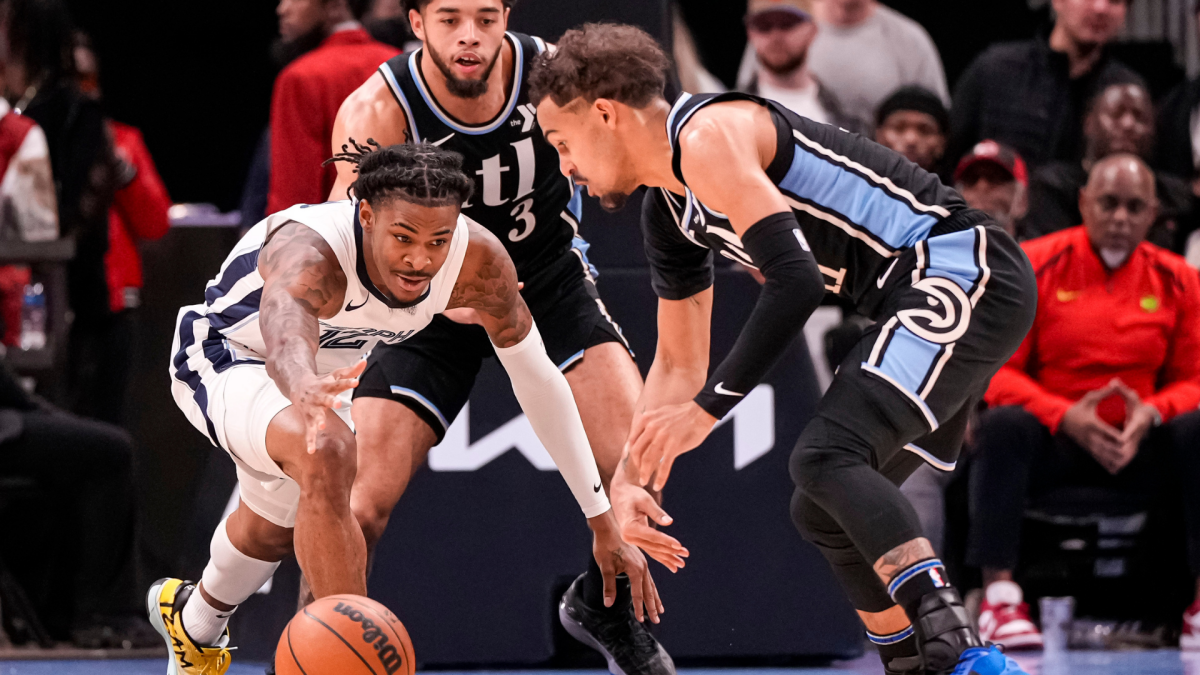
The question of whether Ja Morant holds more trade value than Trae Young cuts to the heart of how the modern NBA evaluates star guards: upside versus availability, box-office appeal versus playoff viability, and style versus scalability.
From a pure talent standpoint, Morant’s case is powerful. He’s an explosive rim attacker, a dynamic transition force, and one of the league’s most marketable young faces. His athleticism warps defenses, and when he’s right, he looks like the kind of primary engine who can tilt a playoff series. For front offices dreaming of raising their ceiling, that kind of upside is intoxicating.
Yet trade value is more than just talent. Morant’s off-court history and availability questions inevitably factor into how rival teams would structure offers. Any front office betting on him is also betting that his maturity arc continues upward and that he can stay on the floor consistently. That doesn’t erase his value, but it complicates it.
Young presents a different profile. He is one of the league’s most productive offensive guards, a proven initiator who can run a high-usage offense and create efficient shots for himself and others. Teams know what his game is: deep shooting range, elite pick-and-roll orchestration, and a track record of carrying heavy offensive burdens. Concerns focus on his defense and whether his style can anchor a true contender without specific roster tailoring.
In this landscape, the Grizzlies’ market for Morant would likely be robust but selective. Rebuilding teams might hesitate to surrender blue-chip prospects for a star with risk factors, while win-now organizations with strong cultures could see him as a franchise-changing swing. The bidding could hinge on which front offices prioritize ceiling over certainty.
Compared directly, Morant may offer the higher perceived upside, while Young offers greater predictability. That tension makes the answer situational: some executives would value Morant more as a potential top-five force, others would lean toward Young as a safer, offensive system in himself. For Memphis, that means Morant remains both an elite on-court asset and a nuanced, high-stakes trade chip.
From a pure talent standpoint, Morant’s case is powerful. He’s an explosive rim attacker, a dynamic transition force, and one of the league’s most marketable young faces. His athleticism warps defenses, and when he’s right, he looks like the kind of primary engine who can tilt a playoff series. For front offices dreaming of raising their ceiling, that kind of upside is intoxicating.
Yet trade value is more than just talent. Morant’s off-court history and availability questions inevitably factor into how rival teams would structure offers. Any front office betting on him is also betting that his maturity arc continues upward and that he can stay on the floor consistently. That doesn’t erase his value, but it complicates it.
Young presents a different profile. He is one of the league’s most productive offensive guards, a proven initiator who can run a high-usage offense and create efficient shots for himself and others. Teams know what his game is: deep shooting range, elite pick-and-roll orchestration, and a track record of carrying heavy offensive burdens. Concerns focus on his defense and whether his style can anchor a true contender without specific roster tailoring.
In this landscape, the Grizzlies’ market for Morant would likely be robust but selective. Rebuilding teams might hesitate to surrender blue-chip prospects for a star with risk factors, while win-now organizations with strong cultures could see him as a franchise-changing swing. The bidding could hinge on which front offices prioritize ceiling over certainty.
Compared directly, Morant may offer the higher perceived upside, while Young offers greater predictability. That tension makes the answer situational: some executives would value Morant more as a potential top-five force, others would lean toward Young as a safer, offensive system in himself. For Memphis, that means Morant remains both an elite on-court asset and a nuanced, high-stakes trade chip.