
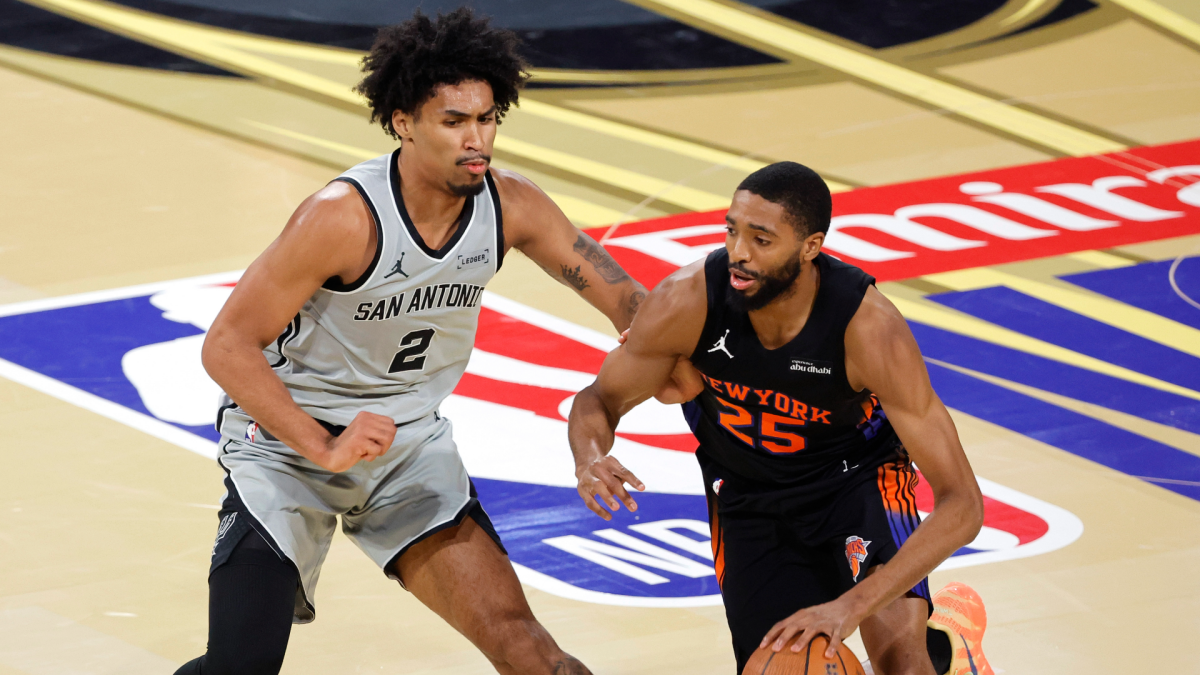
NBA Finals: Why Mikal Bridges and Dylan Harper could be the ultimate Knicks vs. Spurs X-factors
As the Knicks and Spurs clash on the NBA’s biggest stage, the conversation has naturally centered on established stars and veteran tacticians. Yet two names hovering just beneath the marquee could tilt the series in unexpected ways: Mikal Bridges and Dylan Harper.
Bridges is the more familiar quantity. Long regarded as one of the league’s premier two-way wings, he gives New York a versatile connector who can defend across positions while spacing the floor. In a Finals matchup where every possession is heavily scouted and primary options are relentlessly trapped, a player who thrives without monopolizing the ball becomes invaluable. Bridges can slide between roles, from spot-up release valve to secondary creator, and his length and discipline on the perimeter are exactly what the Knicks need to disrupt San Antonio’s flowing offense.
The Spurs, meanwhile, may be turning to the future in Harper, a young guard whose blend of size, handle, and confidence fits the modern backcourt mold. Even in limited minutes, his ability to pressure the rim and collapse defenses could shift the geometry of the floor. New York’s schemes are built to wall off the paint and force contested jumpers; a fearless driver who can kick out to shooters or finish through contact gives San Antonio a different dimension when the game bogs down.
From a league-wide perspective, this matchup underscores how Finals series are increasingly defined not only by superstars but by malleable wings and dynamic guards who can toggle between roles. Bridges represents the archetype of the switchable, low-maintenance impact player contenders covet. Harper embodies the next wave of creators who can bend defenses with both skill and physicality.
If the Knicks win, it may be because Bridges quietly erased a hot hand or knocked down just enough timely threes. If the Spurs prevail, it might trace back to Harper’s fearless stretches that changed the tempo. In a series driven by headliners, these two X-factors could ultimately decide whose banner goes up.
Bridges is the more familiar quantity. Long regarded as one of the league’s premier two-way wings, he gives New York a versatile connector who can defend across positions while spacing the floor. In a Finals matchup where every possession is heavily scouted and primary options are relentlessly trapped, a player who thrives without monopolizing the ball becomes invaluable. Bridges can slide between roles, from spot-up release valve to secondary creator, and his length and discipline on the perimeter are exactly what the Knicks need to disrupt San Antonio’s flowing offense.
The Spurs, meanwhile, may be turning to the future in Harper, a young guard whose blend of size, handle, and confidence fits the modern backcourt mold. Even in limited minutes, his ability to pressure the rim and collapse defenses could shift the geometry of the floor. New York’s schemes are built to wall off the paint and force contested jumpers; a fearless driver who can kick out to shooters or finish through contact gives San Antonio a different dimension when the game bogs down.
From a league-wide perspective, this matchup underscores how Finals series are increasingly defined not only by superstars but by malleable wings and dynamic guards who can toggle between roles. Bridges represents the archetype of the switchable, low-maintenance impact player contenders covet. Harper embodies the next wave of creators who can bend defenses with both skill and physicality.
If the Knicks win, it may be because Bridges quietly erased a hot hand or knocked down just enough timely threes. If the Spurs prevail, it might trace back to Harper’s fearless stretches that changed the tempo. In a series driven by headliners, these two X-factors could ultimately decide whose banner goes up.