The always upside-down 76ers fire Daryl Morey, whose replacement has decades of disarray to overcome
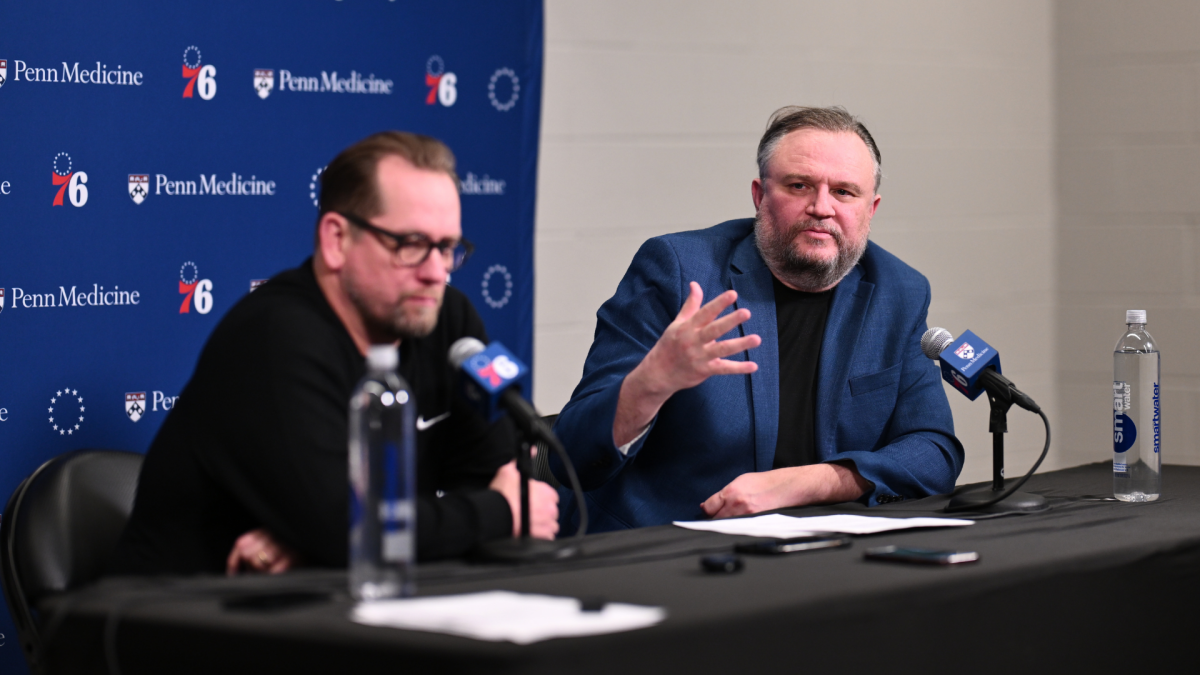
The Philadelphia 76ers have hit the reset button again, parting ways with president of basketball operations Daryl Morey and turning yet another page in a modern era defined by volatility as much as ambition. His successor inherits a franchise that has cycled through visions, power brokers, and philosophies faster than it has advanced in the postseason.
Morey arrived as the face of analytically driven team-building and aggressive star-chasing. His tenure delivered big swings, roster churn, and a steady presence near the top of the Eastern Conference standings, but never the deep playoff breakthrough that would validate the turbulence. In a city that has endured “The Process,” front-office infighting, coaching changes, and high-profile exits, this latest move feels less like a surprise and more like a continuation of the franchise’s perpetual recalibration.
The next lead decision-maker steps into a uniquely complicated situation. There is a perennial MVP candidate in his prime, expectations of contention, and a fan base with little patience for another long-range experiment. At the same time, there are lingering questions about roster balance, cap flexibility, and whether Philadelphia can finally build a coherent identity around its star without overcorrecting at every setback.
Around the league, the Sixers are viewed as both an attractive and daunting job. Few organizations offer a clearer path to immediate relevance; fewer have such a well-earned reputation for instability. The challenge will be establishing a long-term framework that survives playoff disappointments and public scrutiny, rather than reacting to them.
For Philadelphia, this firing is more than a critique of one executive’s philosophy. It is a referendum on an entire era of aggressive, data-forward roster construction that never quite aligned with the realities of chemistry, health, and postseason pressure. The new architect will be tasked with proving that the franchise can finally match its lofty ambitions with sustained, functional leadership — and, ultimately, with winning that lasts longer than the latest regime.
Morey arrived as the face of analytically driven team-building and aggressive star-chasing. His tenure delivered big swings, roster churn, and a steady presence near the top of the Eastern Conference standings, but never the deep playoff breakthrough that would validate the turbulence. In a city that has endured “The Process,” front-office infighting, coaching changes, and high-profile exits, this latest move feels less like a surprise and more like a continuation of the franchise’s perpetual recalibration.
The next lead decision-maker steps into a uniquely complicated situation. There is a perennial MVP candidate in his prime, expectations of contention, and a fan base with little patience for another long-range experiment. At the same time, there are lingering questions about roster balance, cap flexibility, and whether Philadelphia can finally build a coherent identity around its star without overcorrecting at every setback.
Around the league, the Sixers are viewed as both an attractive and daunting job. Few organizations offer a clearer path to immediate relevance; fewer have such a well-earned reputation for instability. The challenge will be establishing a long-term framework that survives playoff disappointments and public scrutiny, rather than reacting to them.
For Philadelphia, this firing is more than a critique of one executive’s philosophy. It is a referendum on an entire era of aggressive, data-forward roster construction that never quite aligned with the realities of chemistry, health, and postseason pressure. The new architect will be tasked with proving that the franchise can finally match its lofty ambitions with sustained, functional leadership — and, ultimately, with winning that lasts longer than the latest regime.