
Bob Myers, Josh Harris address Jared McCain trade; 76ers weighing if 3-max-player roster can still deliver NBA title
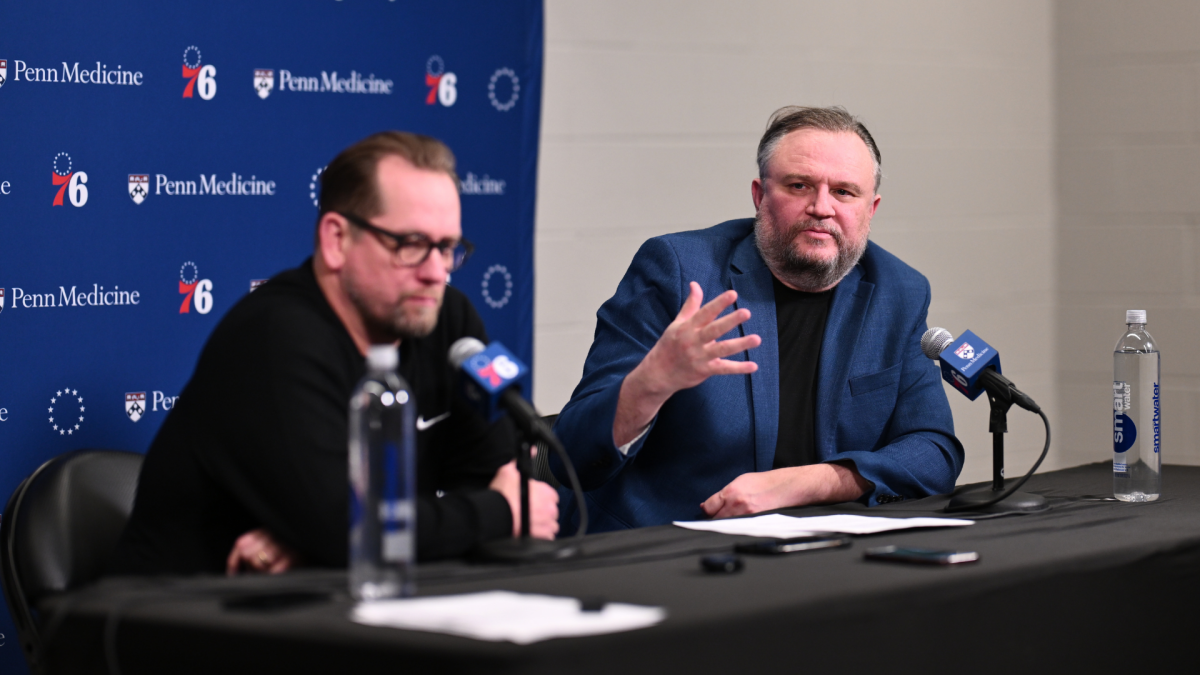
The Philadelphia 76ers’ bold summer continues to reverberate around the league, and the Jared McCain trade has quickly become the latest flashpoint in a franchise defined by win-now decisions. Team president Bob Myers and governor Josh Harris have both addressed the move, framing it as part of a larger question hanging over the organization: can a roster built around three maximum-salary stars still be the foundation of a championship team?
McCain, a highly regarded rookie guard, represented upside, cost control, and optionality. Moving him so early in his NBA life signals that Philadelphia is fully committed to a narrow competitive window around its established core. Myers’ involvement underscores that this isn’t a casual bet. His track record constructing title teams gives weight to the idea that the front office believes star consolidation, not depth, is still the surest path to June.
Harris, for his part, faces the financial and strategic implications. A three-max structure squeezes flexibility under the league’s new collective bargaining rules, which are designed to punish top-heavy rosters through aprons and roster-building restrictions. For Philadelphia, that means every draft asset and rotation spot must hit. Dealing McCain is less about the player alone and more about choosing certainty over the long-term mystery box.
Around the NBA, opinions are split. Recent champions have featured multiple stars, but the margin for error has shrunk. Teams like Denver and Boston have paired elite talent with continuity and role players on value contracts. The question for the 76ers is whether they can replicate that balance while living at the top of the salary food chain.
If the three-max experiment works, the McCain trade will be remembered as a necessary sacrifice in pursuit of a title. If it doesn’t, it will join a long list of inflection points where Philadelphia chose the present at the expense of the future, and found the modern cap environment less forgiving than the star-chasing era that preceded it.
McCain, a highly regarded rookie guard, represented upside, cost control, and optionality. Moving him so early in his NBA life signals that Philadelphia is fully committed to a narrow competitive window around its established core. Myers’ involvement underscores that this isn’t a casual bet. His track record constructing title teams gives weight to the idea that the front office believes star consolidation, not depth, is still the surest path to June.
Harris, for his part, faces the financial and strategic implications. A three-max structure squeezes flexibility under the league’s new collective bargaining rules, which are designed to punish top-heavy rosters through aprons and roster-building restrictions. For Philadelphia, that means every draft asset and rotation spot must hit. Dealing McCain is less about the player alone and more about choosing certainty over the long-term mystery box.
Around the NBA, opinions are split. Recent champions have featured multiple stars, but the margin for error has shrunk. Teams like Denver and Boston have paired elite talent with continuity and role players on value contracts. The question for the 76ers is whether they can replicate that balance while living at the top of the salary food chain.
If the three-max experiment works, the McCain trade will be remembered as a necessary sacrifice in pursuit of a title. If it doesn’t, it will join a long list of inflection points where Philadelphia chose the present at the expense of the future, and found the modern cap environment less forgiving than the star-chasing era that preceded it.